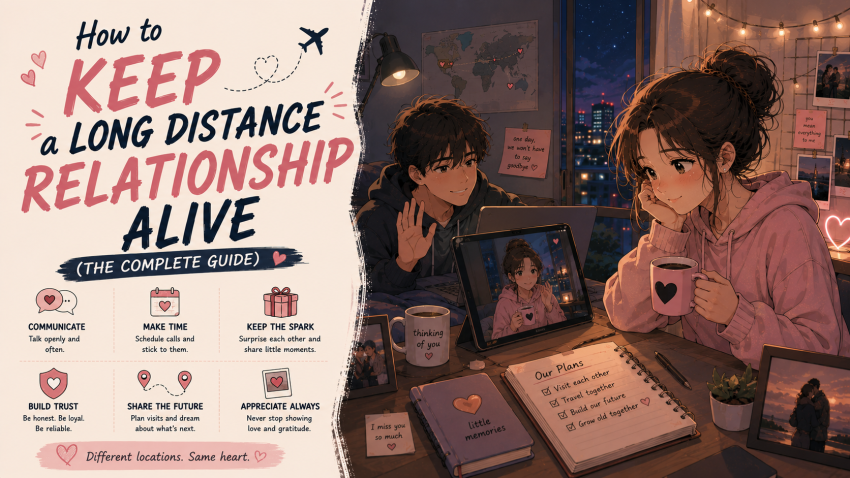
How to keep a long distance relationship alive is a question most couples ask around month four. The early excitement fades. Late night calls start feeling like an obligation. You both start quietly wondering if this is sustainable, or if you’re just delaying the inevitable.
I’ve watched friends go both ways on this. Some couples close the distance stronger than ever. Others drift apart while still technically together. The difference rarely comes down to how much they loved each other. It comes down to what they actually did, day to day, to keep things alive.
If you’re in the middle of this right now, here’s what genuinely works.
Why distance doesn’t kill relationships, neglect does?
Distance itself rarely ends a relationship. What actually causes couples to drift is the slow buildup of small neglect. Missed calls that become normal. Shorter conversations. Effort that quietly fades because nobody’s physically there to notice the gap forming.
Once you accept that, the real work becomes clear. It’s not about fighting the distance. It’s about protecting the daily choices that keep connection alive despite it. Everything below builds toward that same goal.
Build small rituals instead of relying on big gestures
Big gestures feel good. A surprise visit, an elaborate care package, a grand video call date night. But they can’t be the backbone of an LDR, since they’re too infrequent to sustain daily closeness.
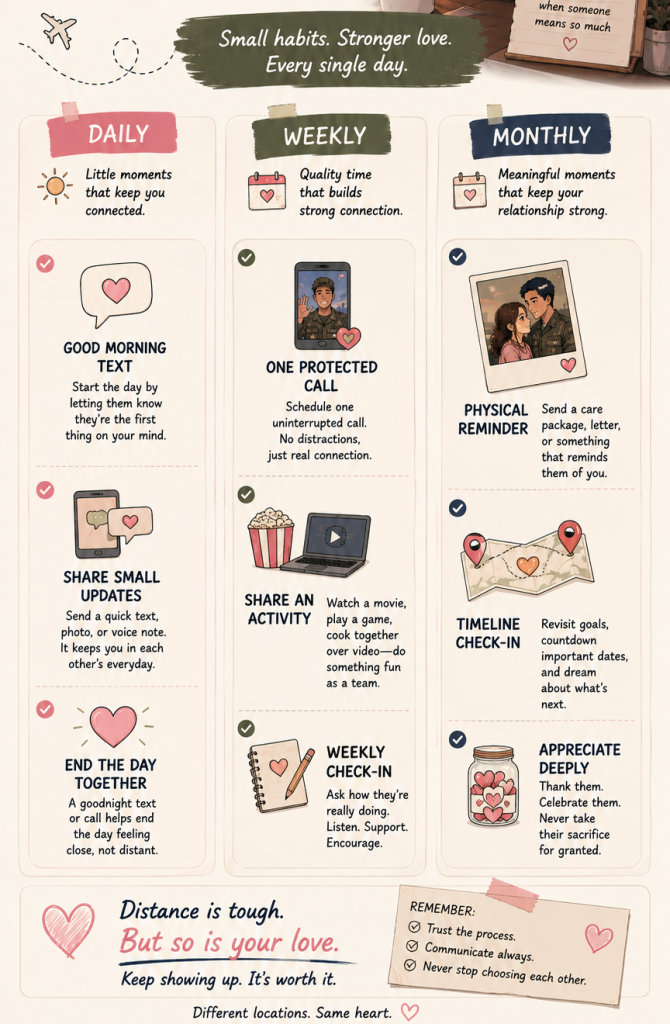
What works better is small, repeated rituals.
- A good morning text sent without fail.
- One protected call time each week.
- A shared show you watch together over video chat.
These small habits create a rhythm, a sense that the relationship has a pulse even on ordinary days apart.
Texting rules that actually help
Texting rules matter more in an LDR than in almost any other kind of relationship, since text often carries the bulk of daily connection.
- The first rule is simple. Match effort, not just word count. Fifty short logistics texts a day can still feel disconnected if none of them share anything real.
- The second rule is timing awareness. Don’t send heavy, emotional messages right before someone’s about to sleep or walk into work. Save deeper conversations for windows when you both have actual attention to give them.
- The third rule is tone generosity. Text strips out facial expression and voice inflection completely. Assume good intent before assuming coldness. A short reply usually means someone’s busy, not upset, unless a real pattern says otherwise.
- The fourth rule is knowing when text simply isn’t enough. Some conversations need a voice behind them. If a text thread starts feeling tense or confusing, that’s the moment to call instead of typing further.
How to be intimate in a long distance relationship
Physical distance doesn’t have to mean emotional or even physical distance disappears entirely. Intimacy in an LDR just takes a different shape, one built more on intention than proximity. It starts with genuine emotional openness, sharing fears, insecurities, and the small details of daily life honestly.
Voice notes carry warmth that text can’t replicate. Hearing someone’s actual voice tends to feel far more intimate than another paragraph of text. Especially when it’s spontaneous and unscripted.
This kind of small effort matters more than people expect. It’s a real part of how to keep a long distance relationship alive day to day.
Shared experiences also build intimacy, even from a distance. Watching something together in real time builds this too. So, does cooking the same meal on a call, or reading the same book and discussing it weekly.
Physical intimacy, when both people are comfortable, can also stay present through thoughtful, consensual communication suited to your relationship. What matters most is that both partners feel safe, respected, and equally invested in maintaining that closeness together.
Long distance relationship communication tips beyond the basics
“You just need to communicate more” is advice most LDR couples have heard a dozen times. Honestly, it’s rarely helpful. Most couples are already communicating constantly. The real problem usually isn’t quantity. It’s depth.
You can exchange fifty messages a day and still feel disconnected, since most of those messages are logistics, not connection. Real closeness comes from a different kind of sharing. Instead of only reporting what happened today, try describing how something actually felt.
Time zones deserve direct attention too, since they’re one of the most underestimated LDR stressors. One person’s exhausted evening is the other’s fresh morning.
Agree on a call time that works for both of you, even if someone occasionally sacrifices sleep. Rotate who makes that sacrifice so it doesn’t always fall on the same person.
Have a simple script ready for bringing up something hard over text. Something like, “something’s been on my mind, can we talk when you have a few minutes”, works better than diving straight in cold. It gives the other person a moment to prepare instead of feeling blindsided.
And don’t mistake constant contact for the actual goal. Comfortable silence, where you both trust the relationship without needing nonstop messages, is healthier than anxious silence filled with worry. A little reassurance early in a busy day prevents a lot of unnecessary spiraling later.
How to be intimate in a long distance relationship
Intimacy across distance requires more intention than it does in person, but it’s genuinely possible to maintain. Emotional intimacy comes first, and it’s built through consistent vulnerability. Share fears, insecurities, and small daily details, not just highlight reel updates.
- Physical intimacy has to get creative without physical presence.
- Voice notes carry warmth text can’t replicate.
- Scheduled video calls where you’re simply present together, even doing separate tasks, can recreate a sense of shared space. Some couples build in intentional, private time together over video as part of maintaining that connection.
Anticipation itself becomes a form of intimacy in an LDR. Planning a visit, counting down to it together, and talking openly about what you’re looking forward to keeps desire alive across the waiting.
Intimacy here isn’t about recreating in-person closeness exactly. It’s about building genuine closeness in the form distance actually allows.
Long distance relationship rules worth setting early
Every LDR benefits from a few explicit, agreed upon rules, rather than leaving expectations unspoken and assumed. Agree on how often you’ll talk, realistically, not aspirationally.
Agree on how you’ll handle attending events or gatherings that involve other people, especially ones the other person might feel unsure about.
- How long is too long for an LDR? There’s no universal number, but most relationship counselors point to somewhere between one and two years as a reasonable outer window without at least a partial plan to close the distance. Beyond that, without any concrete movement toward being together, exhaustion tends to set in for even the most committed couples.
- What are LDR red flags? Watch for a partner who avoids discussing the future entirely, who becomes inconsistent without explanation, or who seems more invested in the idea of you than in genuinely staying connected day to day. Watch also for your own patterns, constant anxiety, excusing repeated inconsistency, or feeling worse after most conversations instead of better.
Handle jealousy and insecurity before they spiral
Distance creates real gaps in visibility, and those gaps tend to breed insecurity if left unaddressed. You don’t see who they’re spending time with. You don’t witness the context behind a delayed reply. Left unchecked, this can turn into anxious spiraling.
The healthiest couples address this early and directly, through proactive transparency rather than control.
- Sharing more context than feels strictly necessary.
- Introducing each other to friends over video calls.
Insecurity thrives in ambiguity. Clarity, given generously, tends to starve it.
Set a shared timeline, even a loose one
This might be the single most important thing on this list, and the one couples most often skip. LDRs without any endpoint in sight tend to struggle more than ones with even a rough plan to eventually close the gap.
The plan doesn’t need to be rigid. It can be as simple as aiming to be in the same city within two years.
What matters is a shared sense of direction, something you’re both working toward together.
The honest bottom line
How to keep a long distance relationship alive really comes down to consistency across all of this at once. Daily rituals, honest communication, clear texting habits, genuine intimacy, and rules both people actually agreed to together.
None of it requires perfection.
What kills long distance relationships covers the patterns worth avoiding along the way. Together, they round out everything this guide on how to keep a long distance relationship alive has covered.

I’m Patricia – a writer, a wife, and the kind of person who feels just about everything at full volume. I live in Manhattan, but I don’t write about the fairytale version of romance. I write about the real stuff: the miscommunications, the long-term commitment, and the tiny, everyday decisions it takes to keep a relationship thriving. I’m just a fellow wildheart trying to put honest words to how love actually feels from the inside.