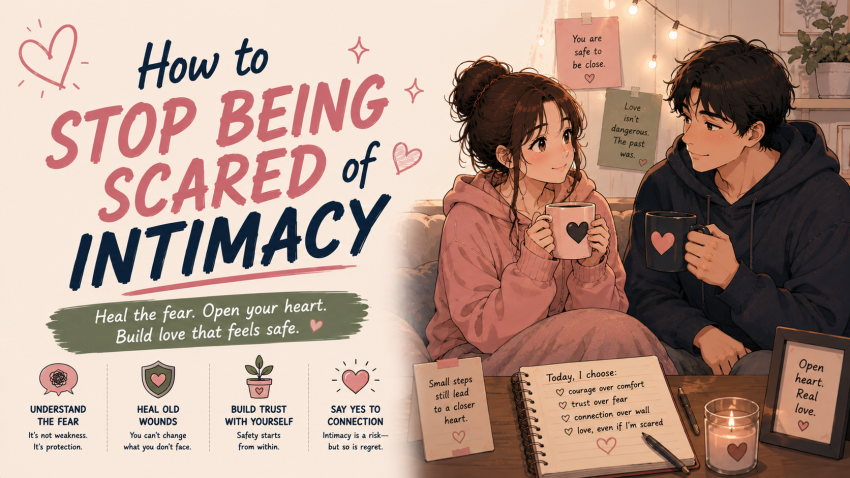
How to stop being scared of intimacy starts with actually naming the fear honestly. Not the surface version, being “too busy” or “not ready yet.”
The real version, where closeness itself feels dangerous, even with someone you genuinely want to be near. That fear is more common than most people realize, and it’s fully possible to work through.
Signs of fear of intimacy worth recognizing
Fear of intimacy doesn’t always look like obvious avoidance. Sometimes it looks like staying busy right when things start feeling close. Sometimes it’s picking small fights whenever a relationship starts deepening, without fully realizing why.
It can also show up as keeping people at arm’s length emotionally, even while staying physically present. Sharing surface details easily, but avoiding real vulnerability. Preferring partners who are unavailable, since that keeps real closeness safely out of reach.
Another common sign is discomfort with being truly seen. Compliments feel hard to accept. Someone noticing your feelings before you’ve said them out loud can feel exposing rather than comforting. This discomfort often hides underneath humor or deflection.
A simple fear of intimacy test
Ask yourself these questions honestly, without editing your answers to sound better.
- Do you often feel an urge to create distance right when a relationship starts going well?
- Do you struggle to share real feelings, even with people you trust?
- Do you find yourself more drawn to people who are emotionally unavailable than to those who are consistently present?
- Does vulnerability feel more like danger than connection, even in safe relationships.
Answering yes to several of these suggests fear of intimacy playing a real role in your patterns.
This isn’t a clinical diagnosis, just an honest starting point. Why am I attracted to emotionally unavailable people goes deeper into one specific pattern this fear often creates.
Why fear of intimacy exists in the first place?
This fear rarely comes from nowhere. Often it traces back to early experiences, a caregiver who was inconsistent, dismissive, or occasionally overwhelming. A child learns to protect themselves by staying a little guarded, and that habit follows into adulthood.
Past relationships play a role too. A painful betrayal can do the same thing. So can a relationship where vulnerability was met with rejection instead of care. Once learned, that association is hard to simply reason your way out of.
Sometimes it’s tied to attachment patterns specifically. Anxious attachment can quietly create emotional unavailability, even in someone who consciously wants closeness more than anything. The fear and the desire can exist at the same time. That’s part of what makes this so confusing to live through.
How to stop being scared of intimacy day to day
- Start small, not with grand vulnerability, but with tiny moments of honesty. Instead of saying “I’m fine” when you’re not, try something honest. “I’m feeling a little off today, not sure why yet” works well.
- Practice letting compliments land instead of deflecting them. If someone says “you looked really happy tonight,” resist the urge to joke it away or change the subject. Just say “thank you, I actually feel really comfortable with you.” Notice how uncomfortable that feels, and sit in it anyway.
- Watch for the specific moment the urge to create distance shows up. Maybe it’s after a genuinely good date, when you suddenly feel the pull to cancel the next one. Maybe it’s mid conversation, when things get emotional and you crack a joke to break the tension.
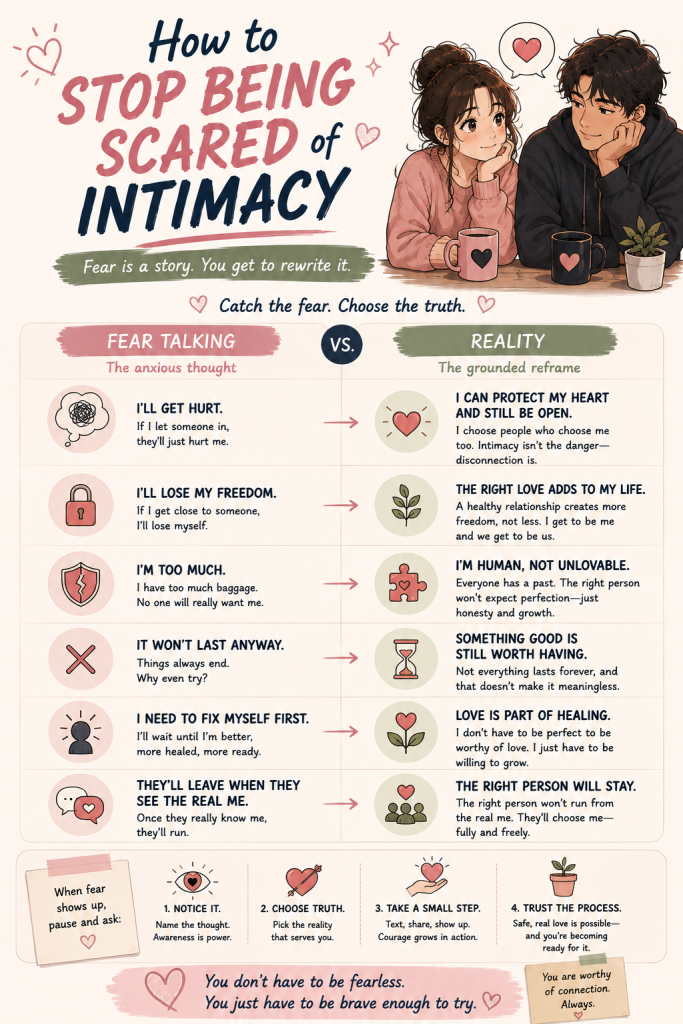
- When you catch that moment, try naming it out loud to yourself first. Something like, “this is the fear talking, not a real reason to pull back.” Then pick one small action that goes against the urge. Send the text you were about to avoid. Stay in the conversation one more minute instead of changing the subject.
- Build a specific vulnerability practice with someone you trust, even outside a romantic relationship. Once a week, tell a friend or partner one honest thing you’d normally keep to yourself. It can be small. “I felt jealous when you mentioned your coworker” counts. So does “I was nervous to bring this up.”
- Use a simple script when you notice yourself withdrawing mid conversation. Try, “I think I’m starting to shut down a little, can we slow down for a second.” This does two things at once. It keeps you engaged instead of disappearing, and it teaches your partner what’s actually happening underneath the silence.
- If physical closeness specifically feels overwhelming, practice staying present through small, low stakes moments first. Hold eye contact for five extra seconds during a normal conversation. Let a hug last two seconds longer than usual before pulling away. These tiny extensions build tolerance without requiring a dramatic leap.
- Keep a short log for a few weeks, even just notes on your phone. Write down each moment you noticed the fear and what you did instead of avoiding. Reviewing this after a month tends to show real, visible progress. That matters when day to day changes feel too small to notice on their own.
Consider working with a therapist if the pattern feels deeply rooted. Look for one who specializes in attachment or trauma informed care specifically. A good therapist will often use exercises much like these, tailored closely to your particular history and triggers.
What progress actually looks like?
How to stop being scared of intimacy isn’t about eliminating fear completely overnight. It’s about noticing the fear, understanding where it comes from, and slowly building tolerance for closeness anyway. Progress here tends to look like small, repeated bravery rather than one dramatic shift.
How to love someone who doesn’t know how to receive love is worth reading too. Especially if someone in your life is patiently working through this alongside you.
I’m Patricia – a writer, a wife, and the kind of person who feels just about everything at full volume. I live in Manhattan, but I don’t write about the fairytale version of romance. I write about the real stuff: the miscommunications, the long-term commitment, and the tiny, everyday decisions it takes to keep a relationship thriving. I’m just a fellow wildheart trying to put honest words to how love actually feels from the inside.