Soft ghosting vs intermittent ghosting confuses people because both feel like a slow, uncomfortable version of disappearing. Neither has the clean, total silence of classic ghosting. They’re related, but not quite the same pattern, and knowing the difference changes how you respond.
Why these two get confused so often?
Both patterns share the same core ingredient, reduced contact without a clear ending. Most people experiencing either one describe the same underlying feeling, a slow erosion of certainty about where they actually stand. That shared confusion is exactly why searches lump these terms together. The underlying behavior is genuinely different once you look closely.
What soft ghosting actually looks like?
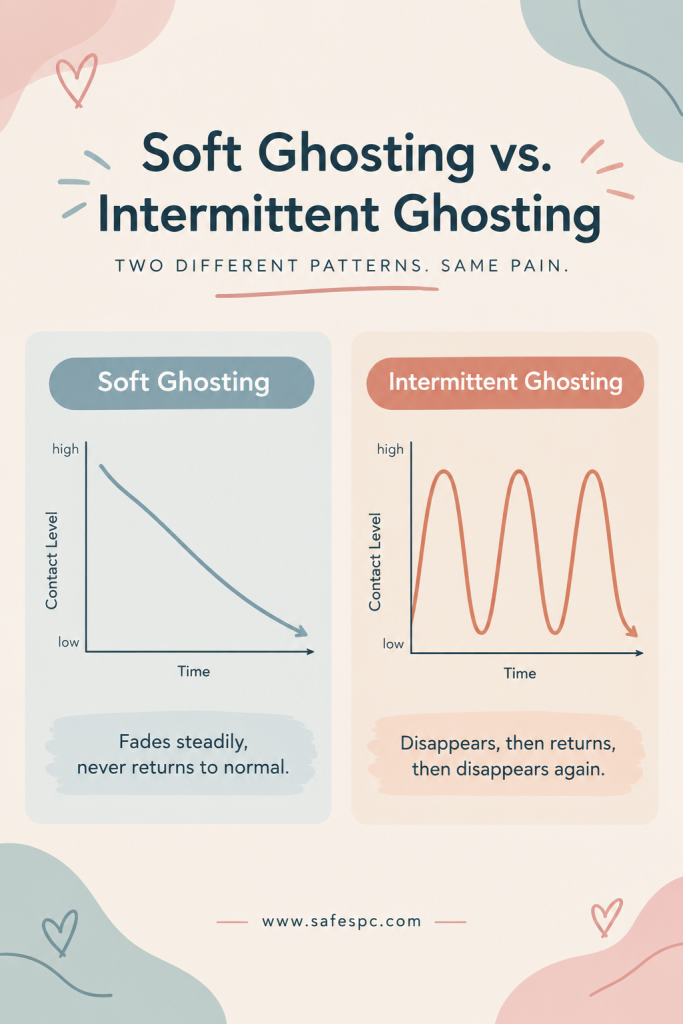
Soft ghosting is a gradual pullback rather than a sudden stop. Replies get shorter and slower. Enthusiasm fades noticeably. Contact never fully stops, but it thins out until it barely resembles what it used to be.
Soft ghosting examples:
- A person who used to text throughout the day now replies once, hours later.
- Plans that used to get made a week out now only happen last minute, if at all.
- Voice messages turn into one-word texts. Compliments and warmth disappear from otherwise normal conversations, leaving something that feels functional but emotionally flat.
What intermittent ghosting actually looks like?
Intermittent ghosting is different in shape. Instead of a steady decline, contact disappears completely for stretches, then returns to full normal warmth, then disappears again. It’s a cycle, not a slope.
This pattern often confuses people more than soft ghosting does. The return to normal contact resets hope each time. Just when you’ve accepted the silence, warm contact comes back, undoing the acceptance you’d started to build.
Some people experience this cycle for months, never quite reaching a stable conclusion either way.
The psychology behind soft ghosting
Soft ghosting usually reflects genuine ambivalence. The person hasn’t decided to leave, but their effort is quietly declining anyway. It’s less a decision and more a gradual loss of investment they haven’t consciously acknowledged.
This often happens when someone lacks the skills to express dwindling interest directly. Their behavior does the talking their words never will. In some cases, it also reflects a genuine internal conflict. Part of them still likes the connection, while another part is quietly checking out.
The psychology behind intermittent ghosting
Intermittent ghosting tends to run on intermittent reinforcement, the same mechanism behind breadcrumbing. Unpredictable warmth creates a stronger pull than steady contact would, whether or not the person driving it realizes it.
This pattern can also reflect a genuinely divided life. Someone juggling other romantic options, unresolved feelings about an ex, or simply inconsistent availability from external stress. In each version, the emotional experience for the person receiving it looks remarkably similar, even when the underlying cause differs.
How do you respond to soft ghosting?
1. Name the shift directly. Say something like, “I’ve noticed things have felt different lately, is everything okay.” This invites honesty without accusation.
2. Watch the response, not just the words. A genuine explanation, even an imperfect one, differs from vague reassurance with no real change afterward.
3. Match their effort rather than compensating for it. Reduce your own initiation to reflect theirs. This reveals the real state of things faster than continuing to over give.
4. Set a decision point. Give it two to three weeks of continued decline before deciding this pattern is your answer, not an anomaly.
How to respond to intermittent ghosting specifically?
Recognize the cycle itself as the real problem, not any single silent stretch. Each return to warmth isn’t proof things are fine. It’s simply the next phase of a repeating pattern.
Resist the urge to reset your expectations every time contact returns. Track the pattern instead. If it’s happened more than twice, that repetition tells you more than any individual warm stretch does.
Ask directly about the inconsistency itself, not just the most recent silence.
Try, “This has happened a few times now, on and off contact. Can we talk about what’s actually going on.” A vague or defensive response to this specific question tends to be more revealing than the silence itself.
Is it normal to be ghosted after 3 months of dating?
Unfortunately, yes, this happens more than people expect, even after months of real connection. Longer timelines don’t make someone immune to conflict avoidance. More invested relationships can even make direct endings feel harder to deliver, not easier.
Will a guy ghost you if he likes you?
Genuine liking reduces the odds, but it doesn’t eliminate them. Someone can have real feelings and still lack the skill or courage to end things directly. Liking someone and communicating maturely are two separate skills entirely. Plenty of people have never had to develop the second one.
When either pattern points to something healthier ending
Sometimes soft ghosting or intermittent ghosting reflects a genuine mismatch rather than a character flaw in the other person.
If real life circumstances are creating the inconsistency, a demanding job, a crisis, a major transition, that context matters. It doesn’t excuse leaving you guessing indefinitely. But it does mean the fix might be a direct conversation about capacity, not a verdict on the relationship.
The bottom line
Soft ghosting vs intermittent ghosting both leave you in uncertain territory, just shaped differently.
Understanding soft ghosting vs intermittent ghosting means recognizing one fades steadily while the other cycles unpredictably. Neither requires you to keep guessing. Naming the actual pattern, then responding to what it really is, is what moves you out of limbo.
1 thought on “Soft Ghosting vs Intermittent Ghosting: The Confusing Difference Explained”